
Room-by-Room Electric Heat Where the Central System Falls Short
A chilly addition, a casita, or a back room the furnace never reaches — 4 Daughters Electric installs electric baseboard heaters on properly sized circuits across Gilbert and the East Valley.
4 Daughters Electric installs electric baseboard heaters across Gilbert and the East Valley — for additions, casitas, converted garages, and individual rooms the central system doesn't heat well. We size the heater to the room, run a dedicated circuit, and wire a line-voltage thermostat for independent room control. Call (480) 896-0325.
Why homeowners add baseboard heat
It's almost always about a specific cold spot rather than the whole house. A new addition or casita has no ductwork. A converted garage needs heat it never had. A far bedroom or an office over the garage stays cold because the central system can't push warm air that far. Baseboard heat solves the single-room problem cleanly, with its own thermostat, without extending ductwork or re-zoning an HVAC system.

Why sizing and the circuit decide success
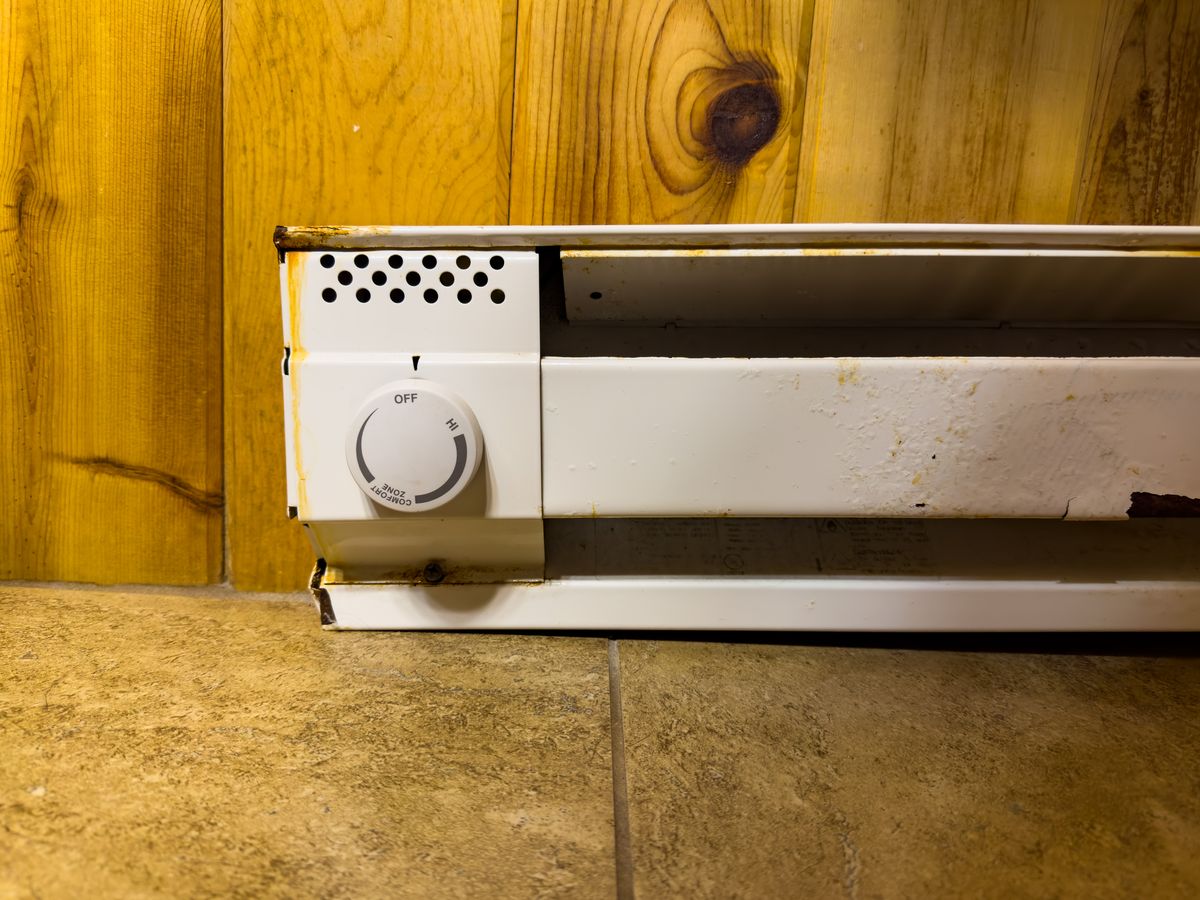
Baseboard heaters are rated in watts, and the unit has to match the room — too small and it never keeps up, too large and it short-cycles and wastes energy. Sizing accounts for room area, ceiling height, insulation and windows. Just as important, electric heat is a heavy continuous load, so each heater (or a small group) needs a correctly sized dedicated circuit; you can't tap a baseboard heater onto a general room circuit and expect it not to trip. Most units are 240 volts for efficiency, paired with a line-voltage thermostat — either in the wall or built into the heater — that switches that full load, which is why the thermostat has to be rated for it. Get the wattage and the dedicated circuit right and the room stays comfortable quietly; get them wrong and you get trips and cold corners.
Placement matters
Baseboard heaters work best under windows, where they counter the cold air that falls off the glass, and they need clearance from furniture and drapes. We plan placement for both comfort and the clearance that keeps them safe.
When another kind of heat is smarter
Baseboard heat is ideal for one or two rooms, but it's not always the best answer. If you're heating a whole home or a large space, a heat pump is far more efficient and worth pricing first. For a bathroom or a small room needing quick warmth, a fan-forced wall heater may suit better. And if the room already has ducting the system simply isn't balancing well, an HVAC adjustment might solve it without any electric heat. We'll point you to the right approach for the space.
Our installation process
Size the heater
We calculate the wattage the room needs from its size, insulation and windows.
Run the dedicated circuit
We confirm panel capacity and run a correctly sized 240V circuit to the heater.
Mount and wire the thermostat
We place the unit for even heat and wire a line-voltage thermostat for independent control.
Permit and test
Permitted where required, then we verify it heats and cycles correctly.
What to have ready
- The room's size and how it's used (bedroom, office, casita, garage).
- How cold it gets and whether it has ducting now.
- Window locations, since heaters go best beneath them.
- Your panel's capacity for another dedicated circuit.
Local detail: where baseboard heat fits in Gilbert
Given the Valley's mild winters and prevalence of heat pumps, baseboard heat is a targeted solution here — most common in the casitas, converted garages and additions that dot larger lots in Queen Creek, San Tan Valley and parts of Gilbert like Higley Groves, plus the occasional room a central system underserves. Because it only runs on the coldest weeks, right-sizing avoids paying to run oversized electric heat. Installation on a new dedicated circuit is permitted through the Town of Gilbert building division, and we handle the permit and inspection.
Baseboard installation FAQs
How big a heater does my room need?
It's based on room area, ceiling height, insulation and windows — not a one-size figure. We calculate the wattage so it keeps up without short-cycling, then size the circuit to match.
Does each heater need its own circuit?
Electric heat is a heavy continuous load, so heaters need dedicated, correctly sized circuits — one heater or a small matched group per circuit. We confirm your panel can carry it first.
Is baseboard heat expensive to run?
Electric resistance heat costs more per unit of heat than a heat pump, but for one or two rooms used a few weeks a year, it's inexpensive overall and cheap to install. For whole-home heat, a heat pump wins.
Can I control each room separately?
Yes — that's a key advantage. Each heater gets its own line-voltage thermostat, so you heat only the rooms in use rather than the whole house.
Where should the heater go?
Under windows is ideal, to offset the cold air off the glass, with clearance from furniture and drapes. We plan placement for even heat and safety.
Baseboard heater installation across Gilbert and the East Valley
Reviews and directions: 4 Daughters Electric Google Business Profile.
Have a room the furnace never warms?
We'll size a baseboard heater to the space, run the dedicated circuit, and give that room its own thermostat — or point you to a better option if there is one.
Call (480) 896-0325Book a Visit