
Protecting the Whole House From Voltage Spikes at the Panel
Monsoon lightning and utility switching send surges down the service line. 4 Daughters Electric installs whole-home surge protection at the panel for Gilbert and East Valley homes full of electronics.
4 Daughters Electric installs whole-home surge protection at the electrical panel for Gilbert and East Valley homes. A panel-mounted surge protective device clamps voltage spikes from monsoon lightning and utility switching before they reach your HVAC, appliances and electronics. It's a compact addition to your service, not a rewire. Call (480) 896-0325.
The problem it solves
Most homeowners don't picture their electrical service as a doorway for damage from outside, but it is. A nearby lightning strike during an Arizona monsoon, or the utility switching the grid on a hot afternoon, can push a voltage spike down the service line and into everything plugged in — the AC's control board, the pool pump, the refrigerator's electronics, the TVs and computers. Power strips at the outlet catch a little of it; nothing at the panel catches the surge before it's already inside the house.

Why surges do the damage they do
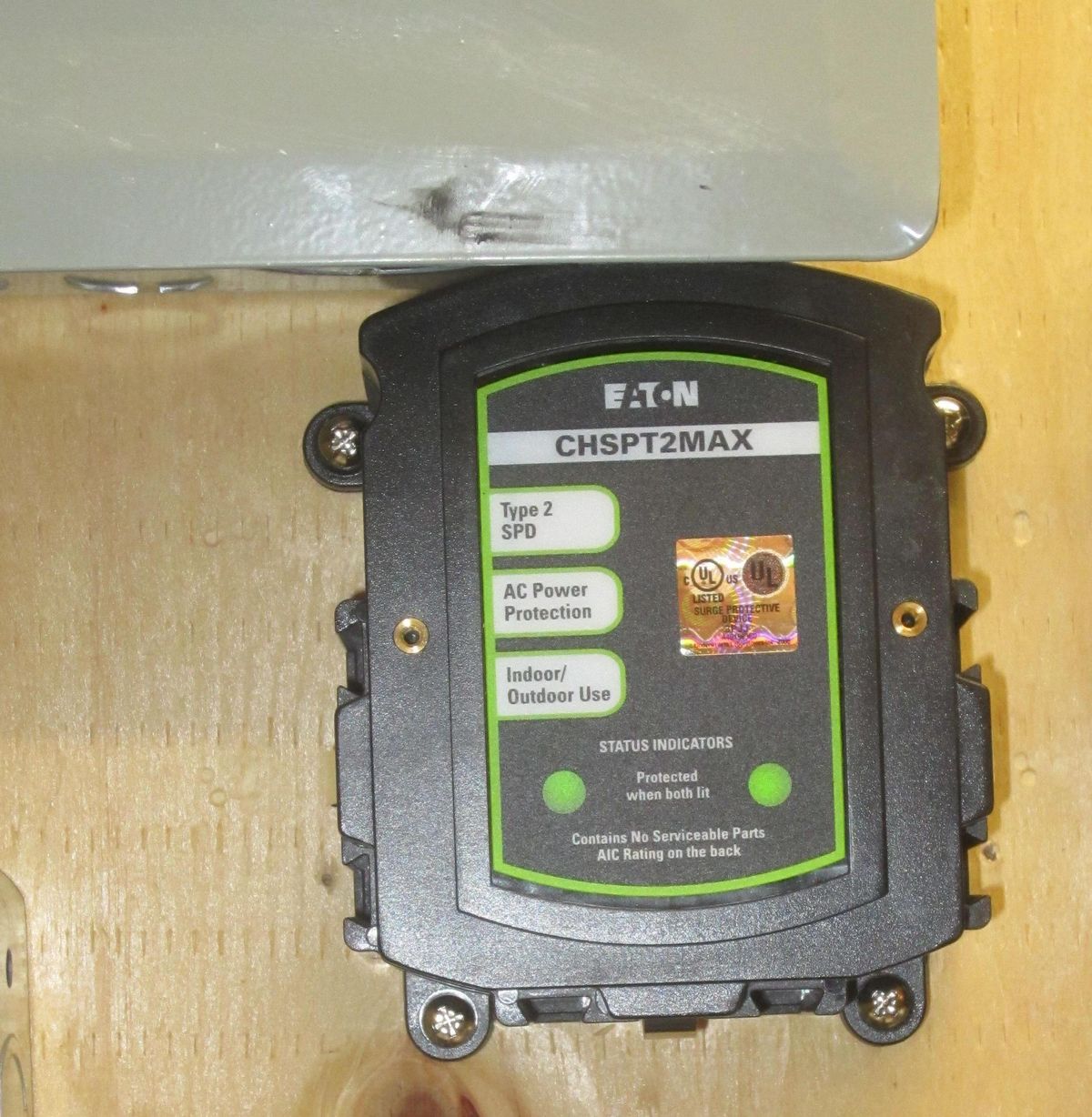
Home electronics are built for a steady ~120/240 volts. A surge is a brief spike far above that — sometimes thousands of volts for a fraction of a second. That spike doesn't always blow a device instantly; more often it degrades the sensitive semiconductors a little at a time, so a "random" HVAC board failure or a dead appliance months after a storm traces back to accumulated surge damage. A whole-home surge protective device, wired at the panel, gives that excess voltage a safe path to ground and clamps what reaches your branch circuits. Point-of-use protectors at your electronics then handle the smaller stuff — the two layers work together, panel first.
Two layers, not one
A panel-mounted device is the primary defense; quality point-of-use surge strips at your sensitive electronics are the second layer for spikes generated inside the home. We install the panel device and can advise on where point-of-use protection is worth adding — together they cover far more than strips alone.
When you may not need it
Surge protection is inexpensive insurance, but it isn't mandatory for every situation. If you rent, or you're about to replace the panel anyway, it may make sense to fold protection into that panel work rather than install twice. If your panel is a known-hazard or obsolete brand, the honest first step is addressing the panel — bolting a surge device onto a panel that needs replacing is treating the wrong problem. We'll flag that before selling you a device.
Our installation process
Check the panel
We confirm the panel is sound and has a suitable location and breaker space for the device.
Select the right SPD
We match a listed surge protective device with an appropriate rating to your service.
Install and bond
The device is wired on a dedicated breaker with short, direct leads and solid grounding — lead length matters for performance.
Verify
We confirm the status indicator is healthy and explain what to watch for over its life.
What to consider before you call
- Whether you've already lost electronics or HVAC boards after storms.
- The value of what's plugged in — HVAC, pool equipment, computers, smart-home gear.
- Whether a panel upgrade or replacement is also on your horizon, so we can combine the work.
- Any existing point-of-use protectors and how old they are.
Local detail: monsoons make it relevant here
The Valley's monsoon season, roughly mid-June into September, brings the lightning and grid switching that generate the surges this device is built for, and the same season loads the grid hardest with everyone's AC running. Homes across Gilbert — Power Ranch, Seville, Layton Lakes — are packed with the exact electronics surges target, from variable-speed pool pumps to inverter HVAC. Adding surge protection is usually a quick, same-visit job; when it's paired with an upgrade that needs a permit, that goes through the Town of Gilbert building division and we handle it.
Surge protection FAQs
Does a whole-home device replace my power strips?
No — it's the first and biggest layer, catching surges at the service entrance. Good point-of-use strips still help with spikes generated inside the home. Panel protection plus strips at sensitive electronics is the layered approach we recommend.
Will it stop lightning from a direct strike?
No device fully stops a direct strike to the home — that's an enormous energy. A whole-home SPD is built for the far more common nearby strikes and grid transients, which cause most surge damage. It dramatically reduces that everyday risk.
How long does a surge protector last?
These devices absorb energy over time and eventually need replacement — a status indicator shows when. After a major event, it's worth checking. We'll show you the indicator and what a healthy one looks like.
Can you add it without replacing my panel?
Usually yes, as long as the panel is sound and has space for a dedicated breaker. If the panel is obsolete or a hazard brand, we'll recommend addressing that first rather than mounting protection on a panel that needs replacing.
Is it worth it for the cost?
Weighed against a single HVAC control board or a fried appliance — let alone several after one storm — a whole-home SPD is modest insurance. In a monsoon climate with electronics-heavy homes, most owners find it an easy call.
Surge protection across Gilbert and the East Valley
Reviews and directions: 4 Daughters Electric Google Business Profile.
Lost electronics after a monsoon storm?
Let us add whole-home surge protection at your panel so the next spike has somewhere to go besides your AC board and appliances.
Call (480) 896-0325Request a Quote