
Getting an Electric Baseboard Heater Warm Again
A baseboard heater that won't heat, trips the breaker, or never shuts off is usually a bad element, thermostat, or circuit. 4 Daughters Electric repairs them across Gilbert and the East Valley.
4 Daughters Electric repairs electric baseboard heaters across Gilbert and the East Valley. When a unit won't put out heat, trips its breaker, runs constantly, or only warms part of its length, we diagnose whether it's the heating element, the thermostat, the wiring, or an undersized circuit — and fix the actual fault. Call (480) 896-0325.
How the trouble shows up
Electric baseboard heat is simple, so its failures are specific: the heater stays cold while the thermostat clicks, it heats but trips the breaker after a while, it runs nonstop and never satisfies the thermostat, or only one section gets warm. In the mild Valley winter these units often sit unused for months, then get switched on during a cold snap and reveal a problem that developed while they were idle.

Why baseboard heaters fail
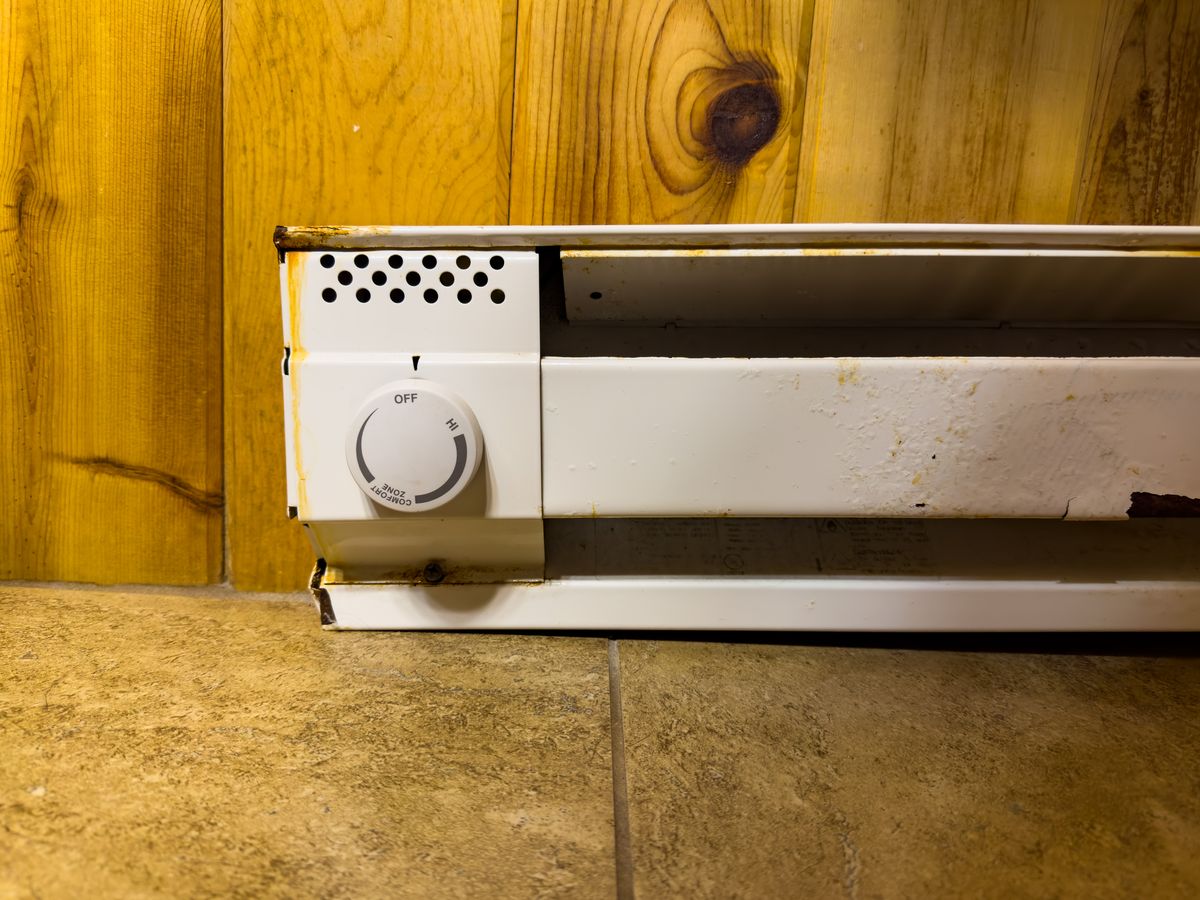
The heat comes from a resistance element inside the baseboard — essentially a long heating wire in a metal fin assembly. Elements degrade and eventually open up, which is why a heater goes cold or only its working section warms. The thermostat, whether a line-voltage unit in the wall or a built-in one on the heater, is the next most common culprit: its contacts wear, and it either stops calling for heat or sticks closed so the heater never turns off. Loose connections at the heater's wiring compartment run hot and can trip the circuit or cause intermittent heat. And because electric heat is a heavy continuous load, a heater on an undersized or shared circuit will trip the breaker simply from being asked to carry more than the wire is rated for. Sorting element from thermostat from circuit is the diagnosis that makes the repair quick.
Clear the heater first
Baseboard heaters need clearance — furniture, drapes or boxes pushed against them block airflow and can scorch. If a heater smells hot or is discolored, turn it off and move anything against it before calling. Clearance isn't just efficiency; it's a fire-safety basic.
When it isn't the heater
Sometimes the fix is upstream. If the heater trips the breaker every time, the circuit may simply be undersized or shared, and the answer is a proper dedicated circuit rather than anything inside the unit. If several things on that circuit die together, that's a circuit problem, not the heater. And a heater that's decades old with a failed element can be cheaper to replace than repair — we'll tell you when a new unit is the better value.
Our baseboard repair process
Confirm the symptom
No heat, partial heat, won't shut off, or trips — each points to element, thermostat, or circuit.
Test element and thermostat
We check the element's continuity and the thermostat's operation and connections.
Repair the fault
We replace a failed element or thermostat, re-terminate hot connections, or address the circuit.
Test the cycle
We confirm the heater warms fully and the thermostat cycles it on and off correctly.
What to check first
- Make sure nothing is pushed against the heater blocking airflow.
- Confirm the thermostat is set above room temperature and, if separate, powered.
- Note whether it trips right away or after running a while.
- If it smells hot or is discolored, turn it off and call.
Local detail: baseboard heat in the East Valley
Electric baseboard heat is a niche in Gilbert's mostly heat-pump and gas-heated housing, but it turns up in additions, casitas, converted garages and some older or manufactured homes across the area, and in a few rooms that a central system doesn't reach well. Because these units are used only on the coldest nights, faults often surface all at once in December and January. Simple heater repairs don't need a permit; adding a proper dedicated circuit does, filed through the Town of Gilbert building division, and we handle it.
Baseboard heater FAQs
Why is my baseboard heater not heating?
Most often a failed heating element or a bad thermostat. If only part of the heater warms, the element has likely opened up. We test both and replace whichever failed.
Why does it trip the breaker?
Either a fault in the heater or, commonly, an undersized or shared circuit for a heavy continuous load. We check the unit and the circuit, and recommend a dedicated circuit if that's the cause.
My heater won't turn off — is that dangerous?
A heater running constantly usually has a stuck thermostat. It wastes energy and overheats the room; turn it off at the breaker and have the thermostat replaced. We handle line-voltage and built-in thermostats.
Is it worth repairing an old baseboard heater?
Often, if it's just a thermostat or a single element. If the unit is very old and the element's gone, a new heater can cost about the same and heat better. We'll give you the honest comparison.
Why does my heater smell when I first turn it on?
A faint burn-off smell from dust on an idle element is normal for the first few minutes. A persistent or strong hot smell is not — turn it off, clear anything against it, and call.
Baseboard heater repair across Gilbert and the East Valley
Reviews and directions: 4 Daughters Electric Google Business Profile.
Baseboard heater cold when you need it?
We'll find whether it's the element, the thermostat, or the circuit — and get warmth back in the room, or tell you if a new unit makes more sense.
Call (480) 896-0325Book a Visit