
Sorting Out a Breaker That Trips or Won't Stay On
A breaker that keeps kicking off is a symptom, not the disease. 4 Daughters Electric finds why it's tripping — overload, short, or a failing breaker — for homes across Gilbert and the East Valley.
4 Daughters Electric diagnoses and repairs circuit breaker problems for Gilbert and East Valley homes. A breaker that trips repeatedly or won't reset is usually reacting to an overload, a short, or a loose lug — not failing on its own. We find the real cause, re-terminate hot connections, and replace breakers that have genuinely worn out. Call (480) 896-0325.
How homeowners describe it
"The breaker trips every time we run the space heater and the hair dryer." "It won't reset no matter what I do." "It pops for no reason at random times." Each of those is the same visible event — a breaker moving to the off position — but three completely different causes hide behind them. A breaker is a safety device doing exactly what it's built to do, so "the breaker is bad" is the least common answer, not the first.
Why a breaker trips
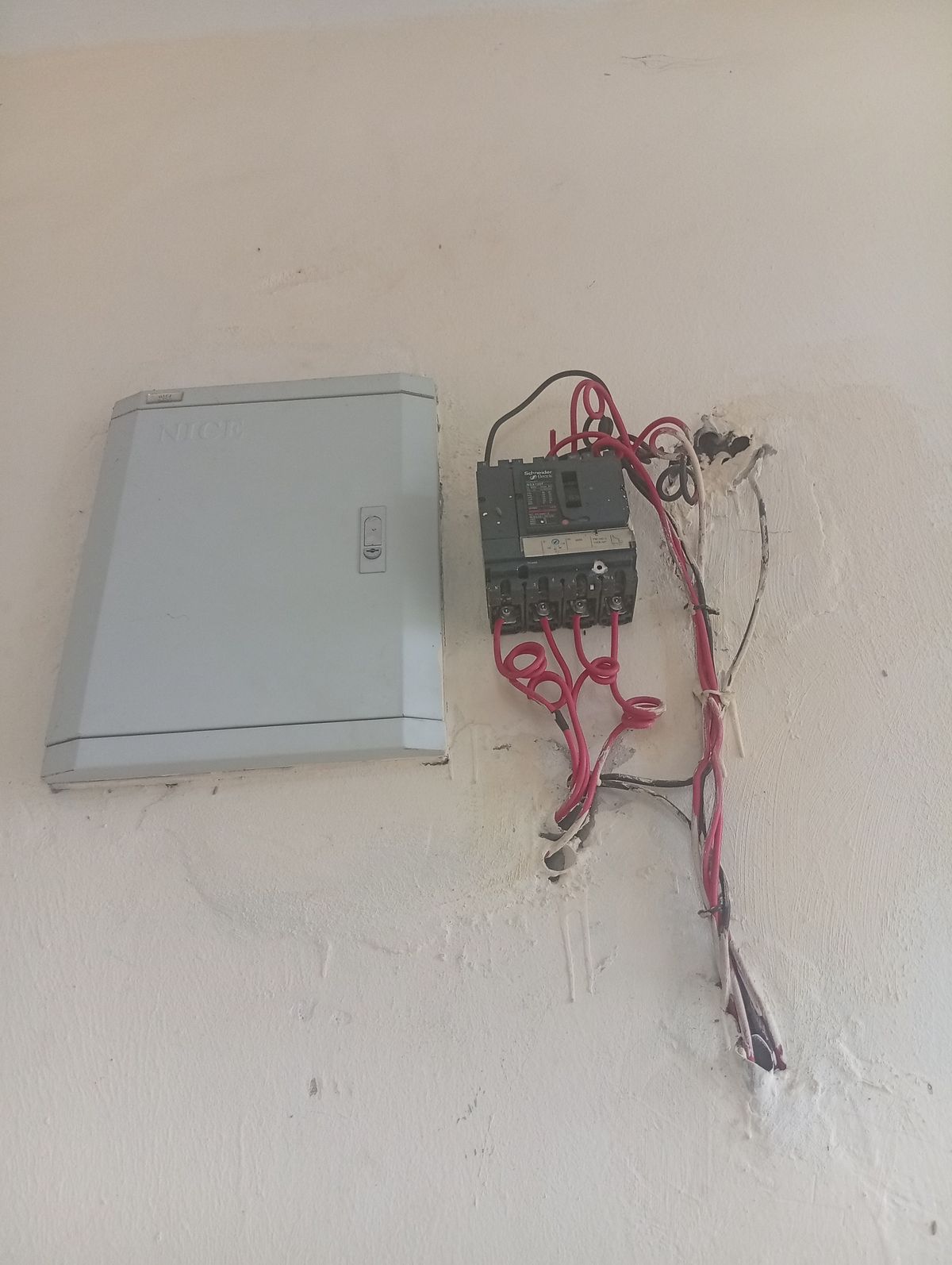
A breaker trips on one of three conditions. Overload: the circuit is drawing more current than the wire is rated to carry, usually too many appliances on one line — the breaker opens to keep the wire from overheating. Short circuit or ground fault: a hot conductor touches a neutral or ground, dumping a huge instantaneous current, and the breaker trips the moment it happens; reset it and it trips right back because the fault is still there. Finally, a genuinely faulty breaker: after thousands of cycles or one severe fault, the internal mechanism can weaken and trip below its rating, or a loose lug where it clamps the panel bus can make it run hot. Telling a nuisance overload from a real short is the whole job, because they get fixed in opposite places.
The one thing not to do
Don't hold, tape, or force a breaker to stay on, and don't replace it with a higher-amp breaker to "stop the tripping." That removes the protection sized to your wiring and lets the wire overheat. If a breaker won't hold, it's telling you something — call (480) 896-0325 and let us find what.
When the breaker isn't the problem
Often the fix is nowhere near the panel. If one appliance trips the circuit every time, the appliance is faulted and the breaker is right to trip — repair or retire the appliance and the breaker behaves. If the trip only happens when several things run at once, the circuit is simply overloaded, and the answer is redistributing load or adding a dedicated circuit, not touching the breaker. And if the breaker itself is fine but heat-damaged from a loose connection, that's panel repair territory. Replacing a healthy breaker fixes none of these, and we'll say so.
Our breaker diagnostic process
Reproduce the trip
We confirm whether it trips on load, instantly on reset, or at random — each points somewhere different.
Test the circuit and the breaker
We meter the circuit for shorts and load and check the breaker's response against its rating.
Fix the actual cause
Re-terminate a loose lug, resolve the overload or short on the circuit, or replace a breaker that's truly failed.
Confirm it holds
We load the circuit and verify the breaker stays set under normal use.
What you can check first
- Note exactly when it trips — on a specific appliance, on combined load, or seemingly at random.
- Unplug everything on that circuit, reset once, and add loads back one at a time.
- Check whether the same appliance trips different outlets — that fingers the appliance.
- If the breaker or panel is warm, stop and call rather than reset again.
Local detail: breaker calls in the East Valley
A lot of Gilbert kitchens from the 1990s and 2000s were wired with fewer small-appliance circuits than today's countertops demand, so the "microwave plus air fryer plus toaster" overload trip is a genuinely common call in Power Ranch, Morrison Ranch and similar tracts. We also see plenty of aging breakers in panels that used aluminum bus stabs, where heat cycling loosens the connection over the years. When the right fix is a new dedicated circuit or panel work requiring a permit, that's handled through the Town of Gilbert Development Services building division, and we manage it.
Circuit breaker FAQs
Why does my breaker trip when I run two appliances?
That's a classic overload — the two together draw more than the circuit's rating, so the breaker opens to protect the wire. The real fix is spreading the load or adding a dedicated circuit, never a bigger breaker.
My breaker won't reset at all. What now?
A breaker that trips instantly on reset is holding back a short or ground fault. Leave it off and call — we trace the fault on the circuit. If the breaker has failed internally, we handle that as breaker replacement.
Can you just replace the breaker with a bigger one?
No — and no reputable electrician will. The breaker is sized to protect that specific wire. A larger breaker lets the wire overheat before it trips, which is a fire risk. If you need more capacity, that's a circuit or panel upgrade.
Is a breaker that trips a lot dangerous?
The tripping itself is protection working. What's worth attention is why — a repeated short, or a breaker running hot from a loose connection, both deserve a look. Frequent nuisance trips also wear the breaker over time.
Do AFCI or GFCI breakers trip for different reasons?
Yes. AFCI breakers trip on arc signatures and GFCI on ground-fault leakage, so they can trip when a standard breaker wouldn't — sometimes on a genuine fault, sometimes on a worn device. We test to tell nuisance trips from real ones.
Breaker repairs across Gilbert and the East Valley
Reviews and directions: 4 Daughters Electric Google Business Profile.
Tired of resetting the same breaker?
Let us find whether it's an overload, a short, or a breaker that's finally worn out — and fix the cause, not just the symptom.
Call (480) 896-0325Request a Visit